









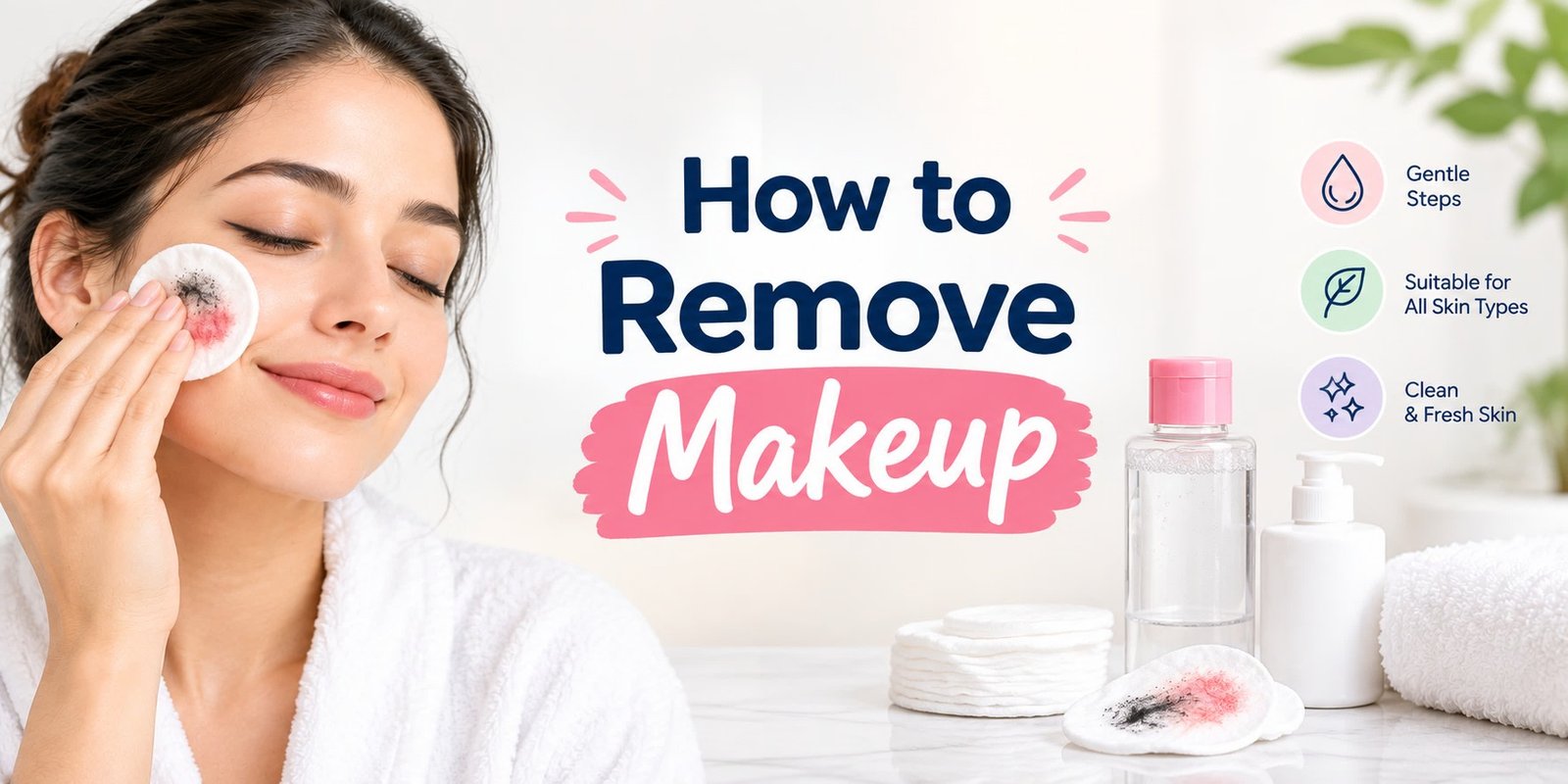
Learning how to remove makeup properly takes about four minutes, and it does more for your skin than most serums you will ever buy. Yet almost everyone gets some part of it wrong: scrubbing kajal off with a tissue, rinsing foundation with hot water, or trusting a wipe to do the whole job.
If you live in Delhi, Mumbai, Bengaluru or anywhere with heavy traffic and humid summers, this matters more than it does in most places. Your face at 10 pm is not carrying only makeup. It is carrying sunscreen, sweat, sebum, and a layer of fine particulate pollution that has been sitting on top of your foundation since morning. Water and a regular face wash will not lift all of that.
Here is the method that works, plus what to do for kajal, waterproof mascara, long-wear lipstick and full bridal makeup.
The short answer
- Wash your hands, then tie your hair back.
- Soak a cotton pad in micellar water or an oil-based cleanser and press it on each eye for 20 seconds before wiping downward.
- Massage an oil cleanser, balm or micellar water over dry face and lips for 60 seconds to dissolve foundation and sunscreen.
- Follow with a gentle water-based face wash and lukewarm water. This is the second cleanse.
- Pat dry, then apply toner (optional), moisturiser and lip balm within three minutes.
That last step matters as much as the first. Most people cleanse well and then walk away with a stripped, tight face.
Why you should never sleep in makeup
One night is not a disaster. A habit is.
Foundation, concealer and compact powder settle into pores and mix with sebum. Leave them overnight, repeatedly, and you get clogged pores, blackheads around the nose and chin, and the kind of small, stubborn bumps on the forehead that people usually blame on hair oil.
Three other things happen. Mascara left on lashes makes them brittle and can irritate the lash line, which is a common trigger for styes. Skin repairs itself at night, and a film of makeup plus pollution particles interferes with that, leaving skin dull by morning. And your night cream cannot do anything useful if it is sitting on top of a layer of silicone primer.
There is also a seasonal angle in India. In peak summer and monsoon humidity, sweat mixes with makeup all day and sits in folds around the nose and jaw. During winter in North India, air quality drops and the particulate load on skin goes up. Both are arguments for a proper cleanse, not a quick splash.
What you actually need
You do not need a shelf of products. You need two:
- Something oil-based or micellar to break down makeup. Cleansing oil, cleansing balm, or micellar water.
- A gentle water-based face wash to clean up after it.
Add cotton pads (not cotton balls, they shed fibres), a soft cotton towel kept only for your face, and cotton buds for cleaning up under the eyes.
Makeup wipes are not on this list. They are useful in a hotel room, at 2 am after a wedding, or in the car on the way back from a shoot. As a daily method they fail, because they smear makeup around and rely on friction rather than chemistry, and the surfactants left behind can irritate skin over time. If you use one, always wash your face afterwards.
How to remove makeup: the full method
Step 1: Clean hands, tied hair
Thirty seconds of hand washing prevents you from transferring oil and bacteria to a face you are about to massage for a minute. Push hair back with a headband so you can clean the hairline and jaw properly. Makeup left along the hairline is one of the most common causes of small breakouts at the temples.
Step 2: Eyes first, and slowly
Eye makeup is the part everyone rushes, and the eye area is where skin is thinnest.
Soak a cotton pad in micellar water or a bi-phase eye makeup remover. Shake bi-phase removers first so the oil and water layers mix. Close your eye, press the pad flat against the lid and lashes, and count to twenty. You are letting the product dissolve the makeup so you do not have to rub.
Then wipe downward and outward, following the direction of lash growth. One or two passes. If there is still mascara at the base of the lashes, use a cotton bud dipped in remover and work along the lash line.
For kajal and kohl in the waterline, look up and run a remover-dipped cotton bud gently along the inner rim. Do not dig. Kajal migrating into the waterline overnight is what leaves that grey shadow under the eyes in the morning.
Never use a face scrub, a hot cloth or a face wash with fragrance near the eye area.
Step 3: First cleanse on a dry face
Take two to three pumps of cleansing oil, or a scoop of balm, and warm it between your palms. Apply to a dry face. Water at this stage stops oil from binding to the makeup.
Massage in small circles for a full minute. Go over the sides of the nose, the jaw, the hairline and the ears, which is where most people stop too early. Include your lips.
Then add a little water to your fingertips and keep massaging. The oil will turn milky white as it emulsifies, which is the point at which it can be rinsed off. Rinse with lukewarm water.
If you prefer micellar water, saturate a pad and sweep over the face in sections until the pad comes away clean. You will usually need two or three pads for a full face of makeup, which is why oil cleansers work out cheaper for heavy makeup wearers.
Step 4: Second cleanse
Now use your regular face wash. A gel or cream cleanser, a coin-sized amount, on damp skin, for about 30 seconds. This picks up whatever the oil left behind: residual sunscreen, sweat, pollution particles, and the oil cleanser itself.
Use lukewarm water, never hot. Hot water feels satisfying and strips the skin barrier, which is what leaves your face tight and flaky.
A word on water. Much of North India has hard water, which leaves a mineral film and makes cleansers harder to rinse. If your skin feels squeaky and taut after washing even with a mild cleanser, hard water is often the reason. A tap filter helps, or finish with a splash of filtered water.
Step 5: Check your work
Swipe a fresh cotton pad with a little toner across the cheeks, nose and jawline. Slight beige tint is normal. A clear brown streak means makeup is still on your face.
Do not respond to that by scrubbing. Repeat a short oil cleanse instead.
Step 6: Moisturise within three minutes
Pat dry with a clean towel, do not rub. While skin is still slightly damp, apply moisturiser. Damp skin holds product better and the moisturiser locks in that water.
Follow with an eye cream if you use one, lip balm, and any night treatment. If you use retinol or a prescription like tretinoin, this is when it goes on, on completely dry skin.
Removing specific types of makeup
Waterproof mascara and long-wear eyeliner
Water-based removers will not touch these. You need an oil-based or bi-phase product. Press, wait, wipe. If mascara is still clinging, coat the lashes in a little cleansing balm or petroleum jelly, leave it for a minute, then wipe with a soft pad.
Contact lens wearers should remove lenses before all of this.
Kajal, kohl and smudged surma
Kajal is designed to stay put, and traditional kohl tends to be greasier than modern pencil formulas. Oil-based removers work best. Use a cotton bud rather than a pad so you can be precise along the waterline, and finish by rinsing the eye area with plain water.
If you wear kajal daily, look at whether your remover is doing the work or whether your fingers are. Chronic rubbing at the outer corner of the eye is a real contributor to darkening and crepey skin there.
Long-wear and matte liquid lipstick
Transfer-proof liquid lipsticks are built to survive dinner. Soak a cotton pad in micellar water or oil, press against the lips for 15 seconds, then wipe from the outer corner inward. Repeat if needed.
For stain that settles into lip lines, massage a little balm or oil into the lips, then wipe gently with a damp soft cloth. Do not scrub dry lips.
Heavy, HD or bridal makeup
Wedding makeup is a different category: primer, high-coverage or HD foundation, heavy setting powder, setting spray, sometimes body makeup on the neck, arms and back.
Plan for three cleanses. Start with an oil cleanser or balm, massage for two full minutes, emulsify and rinse. Repeat the oil cleanse. Then finish with a gentle face wash. Take the same approach to the neck, ears, shoulders and hands, all of which usually get missed.
Do not use a scrub or a face brush the same night. Skin has already been through a long day under pressed powder and heat. Cleanse, moisturise well, sleep, and exfoliate two days later if you need to.
Bindi adhesive or gum lifts off with a cotton pad soaked in cleansing oil held over the spot for 30 seconds.
Glitter and festive makeup
Glitter travels. Press the sticky side of tape lightly on the skin to lift most of the loose particles, then oil cleanse. Avoid dragging glitter near the eyes, since the particles are abrasive.
Matching the method to your skin type
Oily and acne-prone skin: use a lightweight cleansing oil or micellar water first, then a gel cleanser with salicylic acid two or three nights a week. Skip heavy balms and coconut oil on the face. Oily skin still needs a moisturiser, just a gel one.
Dry skin: cleansing balms are your best option, followed by a cream or milk cleanser. Avoid foaming face washes with SLS and anything with high alcohol content.
Combination skin: oil cleanse the whole face, then concentrate the second cleanse on the T-zone.
Sensitive or rosacea-prone skin: micellar water made for sensitive skin, no fragrance, minimal wiping, lukewarm water only. Cut out the toner step.
Mature skin: use balms and cream cleansers, and be careful around the eyes. Pressing beats wiping.
Home remedies: what works and what to skip
Search for how to remove makeup at home in India and you will find a dozen kitchen remedies. Some are reasonable. Some will cost you.
Worth using:
- Cold-pressed olive or almond oil. These break down foundation and mascara well. Massage in, wipe off with a damp soft cloth, then wash with a normal cleanser. Good for dry and normal skin.
- Aloe vera gel. Works on light makeup and is calming for sensitive skin, though it struggles with anything waterproof.
- Raw milk on a cotton pad. Fine for light, everyday makeup. The fat and lactic acid lift some of it. Not enough for a full face, and you should refrigerate what you keep.
- Petroleum jelly for stubborn eye makeup. Effective, cheap, and safe around the eyes. Wipe it off fully, do not leave it on acne-prone skin.
Skip these:
- Coconut oil on acne-prone skin. It removes makeup well but is highly comedogenic and a reliable way to trigger congestion on the cheeks and jaw.
- Toothpaste, lemon juice, baking soda and besan scrubs on makeup. Lemon juice on skin, especially before sun exposure, can cause irritation and dark patches. Baking soda disrupts skin pH. None of these belong in a makeup removal routine.
- Bar soap and body wash. Too alkaline for facial skin, and they do not dissolve silicone-based makeup anyway.
- Rose water alone. Pleasant, useless against foundation.
Whatever you use, always follow with a proper cleanser. Oil alone leaves residue.
Seven mistakes to stop making
- Using only a face wash. Water-based cleansers cannot dissolve waterproof or long-wear makeup. Two steps, always.
- Rubbing instead of dissolving. The pressing-and-waiting habit protects the eye area more than any eye cream.
- Hot water. Lukewarm is enough, and it does not strip the barrier.
- Wiping and going to bed. Wipes leave residue and surfactant on the skin.
- Forgetting the neck, jawline, ears and hairline.
- Over-cleansing. Twice a night with a scrub in between is too much. If skin feels tight, you have overdone it.
- Not washing your tools. A dirty beauty blender or brush undoes a good routine. Wash brushes weekly, blenders more often.
And one more: remove makeup before a workout, not after. Sweating under foundation is a direct route to breakouts along the hairline and jaw.
Building your kit in India
Cleansing oils and balms are widely available now from brands like Minimalist, Plum, Dot & Key, Kama Ayurveda and Aqualogica, and the international options like The Body Shop and Clinique sit at the higher end.
For micellar water, Garnier and Simple are the everyday picks, and Bioderma Sensibio is the standard recommendation for sensitive or reactive skin.
For second cleanse, Cetaphil Gentle Skin Cleanser and CeraVe Hydrating Cleanser suit dry and sensitive skin. Oily and acne-prone skin does well with a salicylic acid gel cleanser from Minimalist, The Derma Co or Neutrogena.
A whole two-step routine can be put together for a few hundred rupees, and it lasts months. The expensive option is fixing the breakouts and pigmentation that come from skipping it.
FAQs
Can I remove makeup with just water?
No. Foundation, sunscreen and most long-wear products are oil or silicone based, and water cannot dissolve them.
Is micellar water enough on its own?
For light makeup, on a day you barely wore anything, it can be. For a full face, follow it with a face wash. In polluted cities, rinse after micellar water even if the bottle says no-rinse.
How long should removing makeup take?
Three to five minutes for everyday makeup. Closer to ten for heavy or bridal makeup.
Should I remove makeup before or after a shower?
Before. Remove eye makeup and do your first cleanse at the basin, then do the second cleanse in the shower with lukewarm water.
Do I need to wash my face again in the morning?
Yes, though a light rinse or gentle cleanser is enough. Your skin has been in contact with pillow, sweat and night products.
Can I use baby oil to remove makeup?
It works on eye makeup but is mineral-oil heavy and can feel greasy and clog pores. A proper cleansing oil is a better buy.
Is it okay to sleep in makeup once in a while?
It happens. Cleanse thoroughly the next morning, skip actives that day, and go back to the routine that night.
What removes makeup from clothes?
Blot, do not rub. Micellar water on a cotton pad works on foundation marks on collars, and a dab of dish soap handles oil-based stains before a normal wash.