








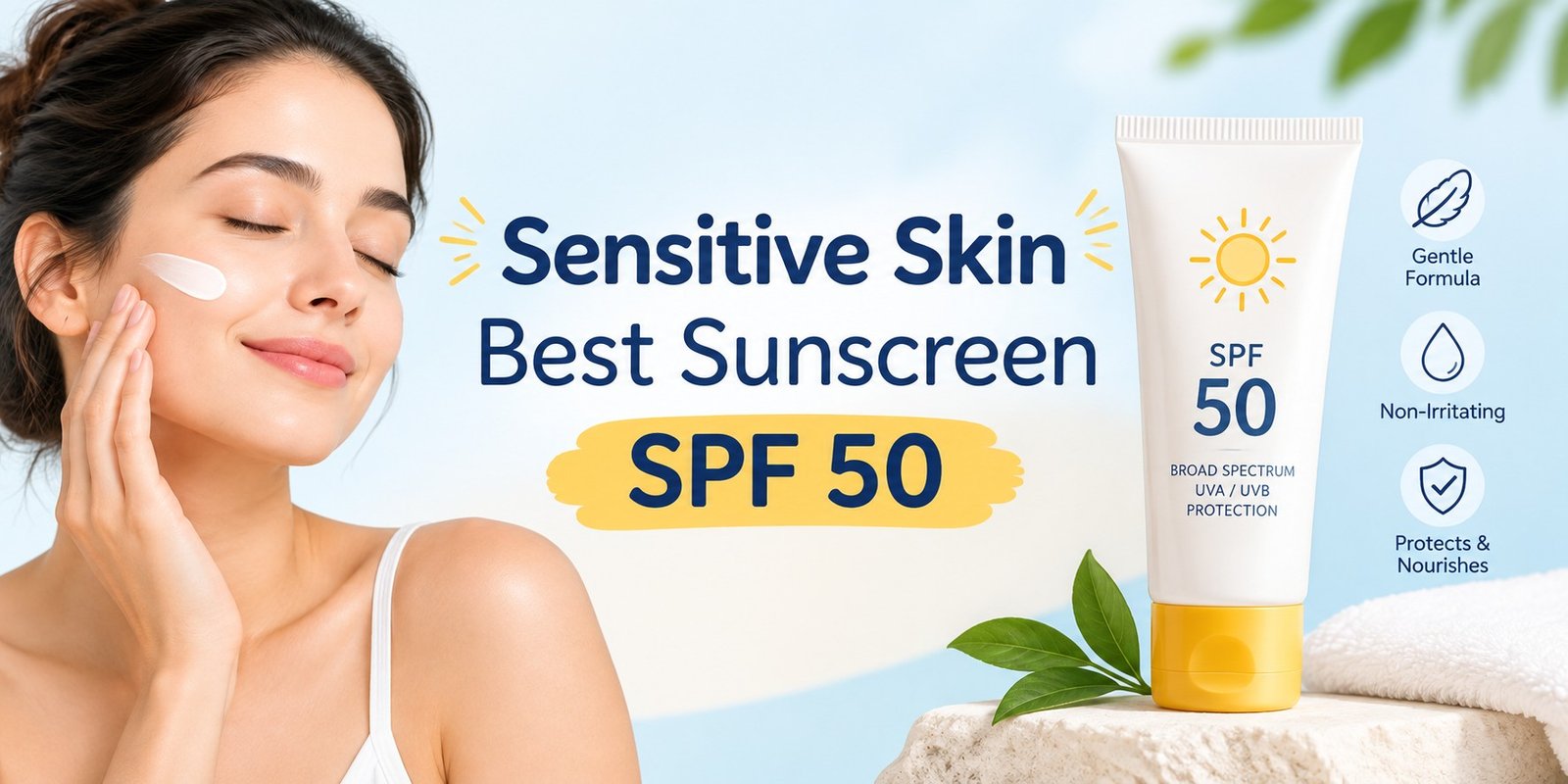
Quick answer: For sensitive skin, look for an SPF 50, PA++++ sunscreen that’s mineral-based (zinc oxide/titanium dioxide) or uses gentle chemical filters, is fragrance-free, and is labeled non-comedogenic. Texture matters as much as SPF number for daily consistency in Indian heat and humidity.
Why SPF 50 Isn’t “Too Strong” for Sensitive Skin
A common misconception is that a high SPF number is automatically harsher on the skin. In reality, SPF measures protection level, not formula strength or irritation potential. SPF 50 blocks around 98% of UVB rays compared to roughly 97% for SPF 30 — a meaningful difference if you’re outdoors for extended periods, which is relevant for most of India’s year-round sun exposure.
What actually causes irritation on sensitive skin usually isn’t the SPF number — it’s the type of UV filter, added fragrance, alcohol content, or essential oils in the formula. A well-formulated SPF 50 sunscreen can be just as gentle as a lower-SPF one, provided the rest of the ingredient list is sensitive-skin-friendly.
What Dermatologists Generally Advise
Dermatologists commonly point out that even within “chemical sunscreen,” a formula can contain up to four different UV-filtering chemicals — making it hard to pinpoint exactly which ingredient is causing irritation. This is one reason mineral sunscreens are often the first recommendation for sensitive or reactive skin: with zinc oxide or titanium dioxide as the active ingredient, there’s a single, well-understood filter rather than a chemical cocktail to troubleshoot.
The other common piece of advice: mineral sunscreens tend to be more photostable, meaning they don’t break down as quickly in sunlight, so they generally don’t need reapplying as frequently as some chemical formulas. That said, the overwhelming dermatological consensus is that the “best” sunscreen is simply the one you’ll wear consistently, at SPF 30 or higher — perfection on paper matters less than daily use in practice.
Mineral vs Chemical Sunscreen: Which Is Better for Sensitive Skin?
| Type | How It Works | Best For |
|---|---|---|
| Mineral (Physical) | Sits on skin’s surface and reflects UV rays (zinc oxide, titanium dioxide) | Rosacea, eczema-prone, very reactive skin |
| Chemical | Absorbs UV rays and converts them to heat | Those wanting a lighter, more cosmetically elegant finish |
Mineral sunscreens are generally considered the gentler option for genuinely sensitive or reactive skin, since they’re less likely to cause the stinging or burning sensation some chemical filters trigger. That said, sunscreen formulation has improved significantly — many modern chemical sunscreens are formulated specifically to be lightweight and non-irritating, so it’s worth patch-testing rather than ruling out a category entirely.
What to Look For on the Label
- SPF 50, PA++++ — the PA rating indicates UVA protection, which matters just as much as UVB (SPF) protection for preventing premature aging and pigmentation.
- Fragrance-free — added fragrance is one of the most common sensitivity triggers in skincare.
- Non-comedogenic — won’t clog pores, important for sensitive skin that’s also acne-prone.
- Broad-spectrum — confirms protection against both UVA and UVB rays.
- Lightweight, non-greasy texture — particularly important in Indian humidity, where heavier formulas are harder to wear consistently.
Consistency tip: The best sunscreen for sensitive skin is the one you’ll actually wear every day. A gentle SPF 50 you reapply is far more effective over time than a “perfect” one you skip because it feels heavy or greasy.
International vs India-Available: Why Availability Matters
Many popular sensitive-skin sunscreen roundups (including major US beauty publications) recommend brands like EltaMD, Supergoop, Vanicream, and Colorescience — genuinely excellent products, but ones that are either unavailable in India or only accessible through expensive imports and resellers, with the added risk of counterfeit stock on unofficial marketplaces. If you’re shopping from India, prioritizing brands with reliable local availability, authorized retailers, and consistent stock means less risk of paying import markups or receiving counterfeit product.
It’s also worth noting: PA rating (a measure of UVA protection widely used in Asia, including India) is a spec that most Western sunscreen guides don’t mention at all, since the US doesn’t use this labeling system. For Indian buyers, checking the PA rating alongside SPF is just as important as the SPF number itself.
Popular SPF 50 Options for Sensitive Skin in India
| Product | Type | Good For |
|---|---|---|
| Cetaphil Sun SPF 50+ | Mineral (zinc-based) | Face & body, no white cast, calms redness |
| La Roche-Posay Anthelios | Chemical, matte finish | Oily-sensitive skin |
| Minimalist SPF 50 PA++++ | Chemical | Budget-friendly daily wear |
| The Derma Co Aqua Gel SPF 50 | Chemical, gel-based | Lightweight, hydrating finish under makeup |
| Aqualogica Radiance+ SPF 50+ | Chemical, dewy finish | Dry-to-normal sensitive skin |
Always check the current formulation and ingredient list before purchasing, as brands periodically reformulate products — what worked for your skin a year ago may have changed.
How to Patch Test a New Sunscreen
- Apply a small amount to your inner forearm or behind your ear.
- Wait 24-48 hours without washing the area.
- Check for redness, itching, or breakouts before applying to your face.
- If your skin reacts, avoid that formula and try a different UV filter type (e.g., switch from chemical to mineral).
Sensitivity varies significantly from person to person, so what works well for one person’s skin may not suit another’s — patch testing is the most reliable way to find your fit.
Frequently Asked Questions
Is SPF 50 too strong for sensitive skin?
No — SPF number reflects protection level, not formula harshness. Irritation usually comes from fragrance, alcohol, or specific UV filters, not the SPF itself.
Mineral or chemical sunscreen — which is better for sensitive skin?
Mineral sunscreens are generally gentler for very reactive or rosacea-prone skin, though well-formulated chemical sunscreens can also work well — patch testing is the best way to know for sure.
What ingredients should sensitive skin avoid in sunscreen?
Watch for added fragrance, alcohol denat, and certain chemical filters like oxybenzone. Look for labels marked fragrance-free and non-comedogenic.
This article is for general information purposes only and is not a substitute for professional dermatological advice. If you have a diagnosed skin condition or persistent irritation, consult a dermatologist before choosing a new sunscreen.